
Export to Saudi Arabia and Market Access
Why export to Saudi Arabia? According to the Economic Complexity Index (ECI), Saudi Arabia is the 26th largest exporting economy and the 29th most complex economy in the world. In 2017, Saudi Arabia exported approximately $170 billion and imported approximately $96.2 billion, resulting in a trade surplus of $74.2 billion. In 2017, Saudi Arabia's GDP reached US$686 billion, and per capita GDP reached US$53,800.
The largest exports to Saudi Arabia come from China, Japan, India, South Korea and the United States. The largest import source countries are China, the United States, Germany, South Korea and France.
Countries bordering Saudi Arabia by land are Iraq, UAE, Kuwait, Jordan, Qatar, Oman and Yemen, and by sea it is bordered by Egypt, Sudan, Eritrea, Bahrain and Iran.
How to export to Saudi Arabia?
If you are an importer or exporter and wish to export products to Saudi Arabia, you should be aware of the regulations and requirements for market access in Saudi Arabia, which vary depending on the type of product and its intended use.
The following are the documents required to export your products to Saudi Arabia and release your products at customs:
Commercial invoice
Packing list
Certificate of Origin
SASO-IECEE for applicable products
Registering products on the Saber platform
State Food and Drug Administration Food Registration
Registration of telecommunications products with CITC
Export to Saudi Arabia
Exporting to Saudi Arabia requires compliance with certain regulations and procedures. Here are the general steps you need to take to export to Saudi Arabia:
Research the market: Understand the demand for your product, competition, and regulations and standards applicable in Saudi Arabia.
Find buyers: Identify potential buyers and establish business relationships with them.
Register your company: Register your company with the Saudi Arabian General Investment Authority (SAGIA) to obtain an investment license.
Obtain the necessary certifications: Obtain the necessary certifications for your product, such as the SABER Certificate for Educational Resources, and comply with any other relevant standards and regulations.
Comply with customs regulations: Make sure you comply with all customs regulations and procedures in Saudi Arabia, including obtaining the necessary import licenses and completing the required paperwork.
Arrange shipping and logistics: Arrange for shipping of your goods to Saudi Arabia and handle all necessary logistics, such as arranging freight, warehousing and insurance.
Follow-up: Follow up with your buyer to ensure everything goes smoothly with the import and delivery of your goods.
Obtain a local agent or distributor: It is recommended to have a local representative in Saudi Arabia to facilitate communication and comply with regulations and customs.
Make sure you have all the necessary documents: You will need a commercial invoice, bill of lading or air waybill, certificate of origin, and other documents to clear your goods through customs.
Understand the local culture: Remember that Saudi Arabia has a unique culture and customs, make sure you understand and respect these when doing business in the country.
It is important to note that regulations and requirements in Saudi Arabia may change from time to time and it is best to always check with Saudi Arabian authorities and trade organizations for the latest -
It is important to note that exporting to Saudi Arabia can be complex and time-consuming, but with the right preparation, research, and compliance with regulations, it can be a profitable market for your business. It is best to consult a trade expert or lawyer who is familiar with the Saudi Arabian market to help you navigate the process smoothly.
What products can be exported to Saudi Arabia?
There are many products that can be exported to Saudi Arabia, depending on market needs and regulations. Examples of products in high demand in Saudi Arabia include:
Food and agricultural products: Saudi Arabia imports large quantities of food and agricultural products, including grains, fruits and vegetables.
Industrial and Construction Materials: Saudi Arabia has a booming construction industry, with high demand for building materials such as steel, cement and glass.
Pharmaceuticals and Medical Equipment: The healthcare industry in Saudi Arabia is growing and there is a high demand for pharmaceuticals and medical equipment.
Textile and apparel: The textile and apparel industry in Saudi Arabia is also growing, and there is a high demand for textile and apparel around the world.
Automobiles and Auto Parts: The automotive industry in Saudi Arabia is also growing and there is a high demand for automobiles and auto parts.
Technology and Electronics: Saudi Arabia has a strong market for technology and electronics, such as smartphones, laptops, and other consumer electronics.
Services: Saudi Arabia is also a large market for services industries such as consulting, education, and entertainment.
It is important to note that regulations and tariffs may change over time and it is always best to check with Saudi Arabian authorities and trade organizations for the latest information and regulations.
How to find an importer in Saudi Arabia
There are several ways to find importers in Saudi Arabia:
Online Directories: There are several online directories that list importers and traders in Saudi Arabia, such as the Saudi Arabian General Investment Authority (SAGIA) and the Saudi Arabian Ministry of Commerce and Investment. These directories list contact information for importers and traders in various industries.
Trade Shows: Attending trade shows in Saudi Arabia is a great way to meet potential importers and learn more about the market.
Trade organizations: Joining trade organizations and industry associations, such as the Saudi Arabian General Investment Authority (SAGIA) and the Saudi Arabian Chamber of Commerce, can provide valuable information and connections to potential importers.
Local Agent or Distributor: Hiring a local agent or distributor can help you find importers and navigate the market as they will understand the local market and have connections.
Online Platforms: There are several online platforms (such as Alibaba) that connect suppliers and manufacturers with importers and traders around the world, including Saudi Arabia.
Consultants: Hiring a trade consultant who specializes in the Saudi Arabian market can help you find importers and navigate the market, as they will understand the local market and make connections.
It is important to note that you should research the companies and importers you are considering doing business with to ensure they are reputable and trustworthy.
Saudi Arabia SASO Regulations for Products Exported to Saudi Arabia
To ensure that your product complies with SASO (Saudi Arabian Standards Organization) regulations, you can take the following steps:
Review SASO standards: Familiarize yourself with the relevant SASO standards for your product to ensure your product meets all requirements.
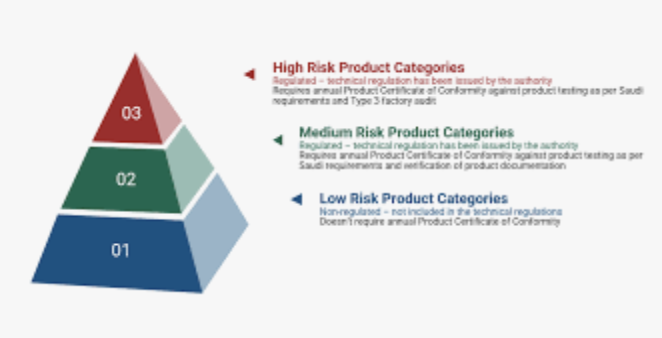
Obtain SASO certification: Submit your products to a testing and certification agency recognized by SASO for testing and certification. This will ensure your product meets all necessary safety, quality and performance requirements.
Label your products: Make sure your product carries the SASO Conformity Mark, indicating that it has been tested and certified.
Keep records: Keep records of all testing and certification your products have undergone, as well as any other relevant documentation such as test reports, inspection reports, and certificates.
Follow-up: Stay in touch with SASO to stay informed of any changes to regulations and standards that may affect your products.
Hire a consultant: It can be helpful to hire a consultant who is familiar with SASO regulations and can guide you through the certification process.
It is important to note that SASO regulations are subject to change and it is important to stay informed of any updates or changes. In addition, some products may require additional certification, such as a SABER certificate.
What is the level of competition in the Saudi Arabian market?
The level of competition in the Saudi Arabian market may vary by industry and product. Some industries may be highly competitive, while others may be less competitive. Some factors that may affect competition in the Saudi Arabian market include:
Economic Conditions: The overall economic condition of Saudi Arabia affects the level of competition in the market. During periods of economic growth, competition may become more intense as more companies enter the market.
Market Saturation: Some industries and products may be more saturated than others, resulting in higher levels of competition.
Government regulations: Government regulations and policies also affect market competition. For example, certain industries may be heavily regulated, which may limit the number of competitors in the market.
Import tariffs: Import tariffs and other trade barriers can also affect competition by making it more difficult for foreign companies to enter the market.
Local Competition: The level of competition from local companies is also an important factor in the market. Local companies may have an advantage over foreign companies due to familiarity with the market and established relationships with customers and suppliers.
When entering the Saudi Arabian market, it is important to understand the competition and conduct a thorough market research to understand the competitive landscape. Additionally, it is best to check with Saudi Arabian authorities and trade organizations for the latest information and regulations.
Export to Saudi Arabia Saso certification process cost and timing (xbaohui.com)
Questions about exporting to Saudi Arabia SABER certification - FAQ (xbaohui.com)
Saudi Arabia foreign trade customs clearance declaration_
______END______