
Saudi Arabia import requirements and customs regulations
Importers to Saudi Arabia must provide the following documents prior to importing:
Commercial Invoice.
The alternative to the bill of lading is the airway bill
Certificate of Origin (not required if country of origin is clear)
Ship (or Airline) Company Certificate
Insurance documentation (if the product is insured by the exporter)
Packing list

Importers are forced to provide all required documentation based on the characteristics of the imported items, such as:
Obtain an IECEE certificate for products that require it.
Register items with appropriate personnel if required.
To determine whether you will find a particular problem with each item, please, with the assistance of Customs Duties or in consultation with your customs broker, locate the items you wish to import and check that the conditions apply.
Importers are also forced to complete the (Fasah) customs clearance process by presenting required documents and filling out customs declaration forms at least forty-eight hours before the goods arrive at the port of entry.
They have the opportunity to provide the information directly, or with the assistance of a customs broker to provide the required documents as quickly as possible, within forty-eight hours before the arrival of the goods via (Fasah) Platform currently available Next site:
http://www.fasah.sa enables importers to observe shipments at customs and prior to arrival and receive instant notifications as soon as the customs declaration has been physically completed.
Saudi Arabia Customs Responsibilities
Based on Royal Decree No. M/13 dated 10/5/1408 H., – 12/30/1987, and as of 10/5/1408 H. (12/ 19/87) the following tariff rates are effective after 13/5/1408 H. (January 2, 1988):
Most standard consumer goods are exempt, corn, barley, cardamom, unroasted coffee, tea, rice, sugar, such as meat and livestock (frozen or fresh).
In order to save the nation's infant industry, a 20% tariff was actually imposed on some imported goods.
Import duties on other products are effectively an ad valorem tax of 12% on the CIF (cost, insurance and freight) value.
A small number of products are actually tariffed on a metric weight or capacity basis rather than an ad valorem basis. However, the cost of these products is very low.
Arab League member states that signed an agreement to promote trade and trade and organize transit between Arab League countries actually received unique benefits.
Royal Decree No. M/56 of 15 June 1987 ratified the International Brussels Agreement of 14 June 1983 on the Uniform Coding System and Description of Goods (HS). According to Decree No. 3/1805 of the Minister of Finance and National Economy of October 19, 1990, corresponding to May 14, 1990, the Kingdom has been under the harmonized system since June 15, 1411, corresponding to 1/1/1991. Please contact Customs for details
Saudi Arabia has used the Harmonized Coding System and Product Descriptions (HS) since 1991.
Products imported from Arab countries that have bilateral trade agreements with Saudi Arabia are actually eligible for further tax reductions.
Shipping document description
Commercial invoice:
All commercial invoices should be on the exporting company’s letterhead. Invoices should have the names and addresses of the consignee and consignor, and should accurately describe the components and cargo (including the six-digit Harmonized System number), trademark, ship name (or possibly a specific date and airline), voyage, port of loading and discharge, net and gross weight, quantity, unit price and extension costs for each category of goods, total value of goods, contents of each package transaction and container, currency, letter of credit number (if applicable), and insurance and freight charges.
As of May 18, 1996, Saudi customs authorities have emphasized that commercial invoices issued by exporters accurately describe the products currently being exported to Saudi Arabia. It must include:
For devices:
Export rows, quantities, and sizes of items
Model
Trademark
Full name of manufacturer
Any additional information that would help identify the egress device
For other export products:
Complete material description such as percentage of ingredients, weight, size and type (if possible)
Full name of manufacturer or manufacturer
Trademark
Any additional information related to the type of exported goods
Commercial invoices must have a notarized statement, signed by the head of the exporting company, stating: "I certify that this invoice is correct and authentic and consistent with our publications and that the goods mentioned are in fact of ** **** origin."
Certificate of Origin: The Certificate of Origin needs to be provided by the manufacturer (or exporter) and should have the name of the vessel sailing (specific date and airline), nationality, name), and the full street address of the manufacturer of all items being shipped to Saudi Arabia. Additionally, the source of each product or component needs to be specified. In addition, a signed statement of results certifying that the document is true and correct should be provided. When the goods are not the exclusive solution of the exporting country, a notarized "Additional Declaration to the Certificate of Origin" must be attached to the certificate of origin.
In addition, the certificate of origin must contain the name and address of the Saudi importer, a description of the goods, and the address of the delivery company.
Bill of Lading (or possibly Air Waybill) : A copy of the non-negotiable bill of lading will usually be provided to the Saudi Arabian Consulate. The bill of lading should be consistent with the commercial invoice and show the description of the goods, value, net and gross weight, dimensions and volumes, markings, packaging options, address and name of the consignee (Saudi importer) and consignor, name and address of the shipping company and/or shipping agent, date and name of the vessel sailing, port of loading and port of discharge. Numbers and markings must match all numbers and markings on the invoice and container.
Ship Certificate: This certificate (actually an additional statement to the bill of lading or air waybill) must be provided by the ship (or airline) organization in more than one original copy. It should be notarized and contain the following information about the ship (or aircraft) named in the bill of lading or airline business certificate:
Ship name (aircraft) and last name (if applicable)
Ship nationality (aircraft)
Owner of the ship (aircraft) Name of the port (airport) at which the ship (aircraft) will call on its way to the Kingdom of Saudi Arabia, including the port of loading (airport) and the port of discharge (airport).
In addition, the ship (ship) company certificate must state that the ship (aircraft) is not allowed to berth or dock at other ports (airports) other than the port (airport) on which it is embarked, and that all information provided in the certificate is correct and true. A regular type of "Bill of Lading Additional Statement" (or Air Waybill) can be purchased from the Saudi Consulate.
Insurance Certificate:
The certificate (issued in multiple copies by an insurance company) must contain the true quantity insured, the value and description of the insured goods, the name of the ship, port of loading and Saudi port of discharge, and the address and name of the beneficiary. In addition, the "Additional Statement to the Insurance Policy" (available from the Saudi Consulate) must state that the insurance business has a qualified and designated representative or agent in the Kingdom of Saudi Arabia and provide his name and complete address.
When the shipment is actually insured by an insurance company in Saudi Arabia, exporters must include the organization's name and address on their letterhead.
Packing list:
Include the address and name of the consignor and consignor, value and description of the exported goods, gross and net weight, selection of packaging and contents, quantity of contents and cans, number of seals, letter of credit number (if applicable).
Special files
Certain documentation may also be required depending on the dynamics of exports to Saudi Arabia, or possibly upon the requirements of the Saudi importer. Special certificates or possible documents must also be authenticated according to the above-mentioned authentication process for transport documents.
Food export documents:
Labeling requirements for food and food products purchased in the Kingdom of Saudi Arabia are actually based on the Saudi Arabian Standards Organization (SASO). Exporters of products shall comply (among many other SASO standards) with the mandatory standard SSA 1/1984, whether for sample display or commercial shipment, and shall provide the following certificates:
Food Manufacturer's Ingredients Certificate :Food Manufacturer's Ingredients Certificate: This certificate must add a description of the exported food (portions and amounts of each ingredient), storage, microbiological standards, chemical data and commodity life (date and production date and expiry date). When the product contains any animal fat, the certificate should verify the type of animal from which it is derived, or may indicate that no pork or its artificial flavors or animal fats are used. This certificate must be received from the Community Health Department and should be signed.
Consumer Protection Certificate: Consumer Protection Certificate: This certificate confirms the healthfulness of different substances of food products exported to Saudi Arabia, as well as their suitability and safety for human use. The certificate must be received from the office of the Ministry of Agriculture of the exporting country and should be signed.
Price List: Price List: The cost schedule must be given by the exporter on his or her letterhead and must indicate that the charges for items exported to the Kingdom of Saudi Arabia are in fact the regular prices in local stores.
Meat import
In addition to the usual delivery documents, all meat shipments need to be accompanied by the following certificates:
"Halal" meat certificate: This certificate indicates that the slaughter was performed in an officially licensed slaughterhouse according to Islamic procedures. "Halal" meat certificates must be legalized by a recognized Islamic center in the United States. It also needs to accompany the shipment of poultry to Saudi Arabia.
Official health certificate: The certificate must indicate the specific slaughter date, average age and species of animal for each shipment. The health certificate should also state that the animal was examined by a qualified veterinarian within 12 hours before slaughter and immediately after slaughter and was found to be completely free of disease and fit for human use.
Health certificates are virtually required for all types of meat (including seafood and chicken), meat solutions, livestock, vegetables, fruits and human blood exported to Saudi Arabia, certifying that they are completely free from pests and/or diseases.
Import of grains and seeds to Saudi Arabia
In addition to ordinary shipping documents, exporters of grains or seeds are required to provide the following certified certificates:
Inspection Certificate: The certificate must be issued by a professional seed inspection company and includes:
Buyer address and name
Seller’s address and name
Quantity and type
Seed class
Ship name
Packaging form
Sacks, bags and even written information for each package
Percentage and evaluation results of moisture, impurities, purity and germination
Chemical Seed Treatment Methods Verify that the seeds are indeed completely free of pests, epidemics, diseases and weed seeds (their type and number in the 2 kg sample should be stated).
Phytosanitary certificate: Phytosanitary Certificate: The purpose of this certificate is actually to verify that the seeds or grains to be exported to the Kingdom of Saudi Arabia are indeed completely free from agricultural diseases. It can be received from the Ministry of Agriculture of the exporting country. This certificate is virtually required for all shipments of plant material, plants, wood, agricultural seeds, grains, rice and flour.
Seed Analysis Certificate: This certificate actually proves the purity of the seeds sent to Saudi Arabia. It is provided by the Ministry of Agriculture of the exporting country.
Certificate of Weight: This certificate is actually issued by the exporter and indicates the name and address of the Saudi importer, the name of the delivery vessel, the selected bill of lading, the number of packages and seals, and the total weight and shipping net.
Animal feed additives:
In addition to the usual shipping documents, shipments must include:
Free sales certificate
Product registration certificate
Certificate of Analysis
Product Safety Data Sheet
Shipping livestock to the kingdom
In addition to the usual shipping documents, shipments must include:
Weight certificate showing typical weight of livestock for export
A health certificate issued by the Ministry of Agriculture of the exporting country confirming that the livestock is in fact free from disease
Health certificate issued by veterinarian
Genealogy certificate issued by the Ministry of Agriculture of the exporting country
Production records
Acceptance Statement
Pet shipping certificate:
A health certificate issued by a veterinarian and recognized by the Ministry of Agriculture of the exporting country, certifying that the animals are in fact completely free from disease
Animal vaccination certificate
Only guard dogs, backpackers and guide dogs are allowed into Saudi Arabia.
Importation of Horses Only Saudis are actually allowed to import horses into the Kingdom. Importers should submit an application to the President of the Saudi Equestrian Club stating the number of horses, the country of export and the traditional facilities at the Kingdom’s ports of entry. The software must be accompanied by the following files:
Certificate of Origin provided by a business that breeds and breeds horses, with a color photograph of each horse attached. The certificate must be authorized by the Ministry of Agriculture of the exporting country, the State Council of the exporting country, and endorsed by the Consulate of Saudi Arabia.
A health certificate certifying that the horse is in fact free from disease, authorized by a veterinarian and certified as described above.
Vegetable and Fruit Health Certificate This certificate should accompany all shipments of fruits and vegetables to the Kingdom, certifying that such exports are in fact completely free from pests, bugs and any other agricultural diseases, and that they have not been exposed to ionizing radiation (but may be treated with aluminum phosphide). This certificate can be obtained from the Ministry of Agriculture of the exporting country.
SASO Certificate of Conformity for Imported Electrical Appliances, Equipment and Accessories
You will find 2 types of certificates:
Certificate of Conformity for Electrical Equipment and Equipment
Electrical accessories certificate
The relevant certificate (regular forms can be purchased from the Saudi Consulate) must be provided by the manufacturer on their official letterhead, notarized by a notary public, endorsed by the regional chamber of commerce, and then sent to the Saudi Arabian Standards Organization (SASO) in Riyadh, Saudi Arabia at least 2 weeks before the shipment date, pending confirmation. Upon approval, the certificate will be returned to the manufacturing company, which should include the stamped information on each shipment of specific goods to Saudi Arabia. These certificates are only required for electrical projects governed by SASO. (See list of products regulated by ICCP.)
Motor vehicle import The manufacturer shall send a motor vehicle certificate of conformity in Arabic or English to SASO for endorsement at least 3 weeks before dispatching the first batch of motor vehicles each season. People should obtain this special certificate from the manufacturer before each car is shipped for their private use in the Kingdom.
Pharmaceutical imports
All pharmaceutical products shipped to Saudi Arabia should be accompanied by a free Certificate of Sale. It may have been received from the Ministry of Human and Health Services of the exporting country and should actually be provided to the Saudi Arabian Consulate along with various other documents.
In addition, the import of drugs and medicinal products requires a certificate from the Department of Human and Health Services of the exporting country that the drugs are actually in use by the public in the exporting country under the exact same brand name and formulation, and should also have the date name, formulation, selection of each product and production license (if personnel is indeed required). The certificate must be recognized by the Department of State's Office of Certification in Washington, D.C. and authenticated by the Saudi Arabian Consulate.
Medication or medical treatment is not actually allowed into the Kingdom unless previously registered with the Ministry of Health. The ministry reviews applications supported by the necessary certificates from the Saudi consulate to legalize export lands and analyzes samples to ensure they meet specifications before issuing a license. For more information, please contact the Drug Registration Department of the Ministry of Health.
Some other requirements
The import of plants, poultry, live animals, seeds, vegetables and fruits should be approved in advance by the relevant Saudi Arabian authorities and should be accompanied by a phytosanitary/health certificate certifying that they are completely free from other diseases and pests. Almost all shipments of plant life are inspected upon arrival in Saudi Arabia.
In accordance with Royal Decree 5/E/27748 of 24 November 1402, all goods imported into Saudi Arabia are required to indicate their country of origin unless this is not possible.
Suppliers and carpet companies must indicate the thickness or mass per square meter, type, pile weight and origin in Arabic, using every five meters along the length of the carpet roll. All carpet manufacturers, suppliers and distributors are required to clearly display title information on sales invoices.
Other shaving products and brushes made of raw hair must be accompanied by official certification that the goods are in fact free of anthrax bacteria.
Imported used clothing requires an official sterilization certificate. The goods will be assessed by Saudi Arabia’s quarantine officials.
Saudi law absolutely prohibits the import, use and sale of alcohol, narcotics and firearms. Related sporting and hunting weapons require specific licensing.
Books and publications actually require customs endorsement and evaluation before entry. In particular, pornography and obscene literature are not allowed.
Allows personal use of very small quantities of medical drugs. Travelers must be prepared to clearly present a doctor's prescription to confirm medication and confirm that the medication is indeed for personal use.
Non-commercial goods worth less than SAR 10,000 (approximately USD 2,600) and cars imported into Saudi Arabia for personal use, regardless of their value, do not require complete shipping documentation.
Commercial samples actually require payment of surcharges and duties via a deposit or bank guarantee equal to the duties upon importation. If the goods are re-exported within twelve weeks, a refund will be announced. In the unlikely event that samples become available, deposits and security deposits are non-refundable. Importing samples requires prior authorization from the Director-General of Customs and providing him with a sample list, catalog and price. A 12% non-refundable customs duty is actually imposed on the import of watches and jewelry samples. Shipment of these commercial samples requires verified shipping documentation.
Arrangement of Shipping Documents
Shipping scanned documents must be provided to the Saudi Arabian Consulate in the following order and stapled together:
Commercial invoice
Certificate of Origin
Insurance Certificate
Bill of lading (or air waybill)
Ship Certificate
Packing list
Specific files
The Export Information Sheet is required to accompany these documents but should not be stapled with them.
Business legal documents Legal documents include:
Authorization letter
Agency Agreement
Single Distributorship
Trademark registration
Free sales certificate
Bid or solicitation documents
Registration of Partnerships, Companies and Joint Ventures
All company documents should be legalized as follows:
Notarized by a notary public
Endorsed by the county clerk of the county in which the notary is actually appointed
Legalized by Saudi Consulate
Saudi Arabia import standards
In November 1995, the Saudi Ministry of Commerce implemented the International Conformity Certification Program (ICCP) in partnership with the Saudi Arabian Standards Organization (SASO). SASO relies primarily on international standards when issuing Saudi specifications, and SASO specification compliance is used for other items produced locally and imported to provide necessary consumer protection. All approved SASO programs, such as the ICCP program, operate within the guidelines of the International Standards Organization.
SASO ICCP obtains a Certificate of Conformity for each shipment of SASO controlled items shipped to Saudi Arabia. Demonstration of compliance with SASO requirements must be provided for each shipment before a certificate of conformity is issued. Goods without a certificate of compliance will be rejected at Saudi ports of entry. SASO has designated national offices throughout the community to verify compliance with each shipment before it leaves the port of export. In addition, SASO has authorized regional licensing centers to manage the registration process, perform compliance verification and issue SASO type approval licenses. In many cases, SASO National Offices may also be required to conduct random sampling and testing of products.
Recently SASO released the SABER system to register all imported products according to Saudi technical regulations
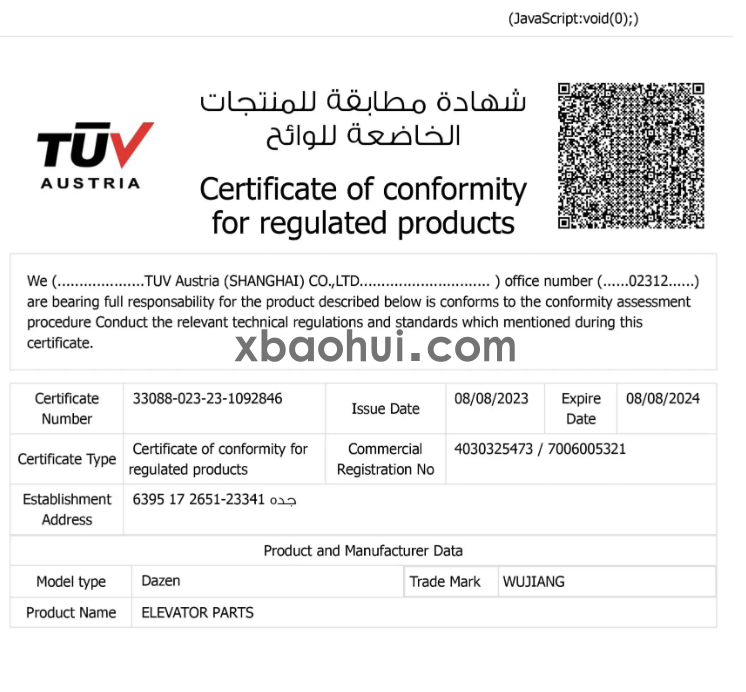
Saudi Certificate of Conformity
When exporting to the Kingdom of Saudi Arabia, as an exporter you should be aware that the Saudi Standards Organization SASO has requirements for the conformity assessment of products and these requirements determine the conformity assessment procedures to be followed.
Your first step starts with the HS Code Customs Code. You must first determine the appropriate code, and then through the Saber platform or the Saudi Customs Portal, you can determine whether the product is regulated.
If the product is regulated by Saudi technical regulations and requires a PCOC certificate, the product's certificate of conformity must be issued by one of the recognized certification bodies, if not regulated you will issue a self-declaration certificate.
Some other products may require additional certificates and marks, such as Saudi Quality Mark, SASO IECEE National Approval Certificate, Energy Efficiency Label, etc.
Please contact us for more information.
Related links
Export to Saudi Arabia Saso certification process cost and timing saber certification
Access requirements and customs regulations for exporting to Saudi Arabia
————END————