
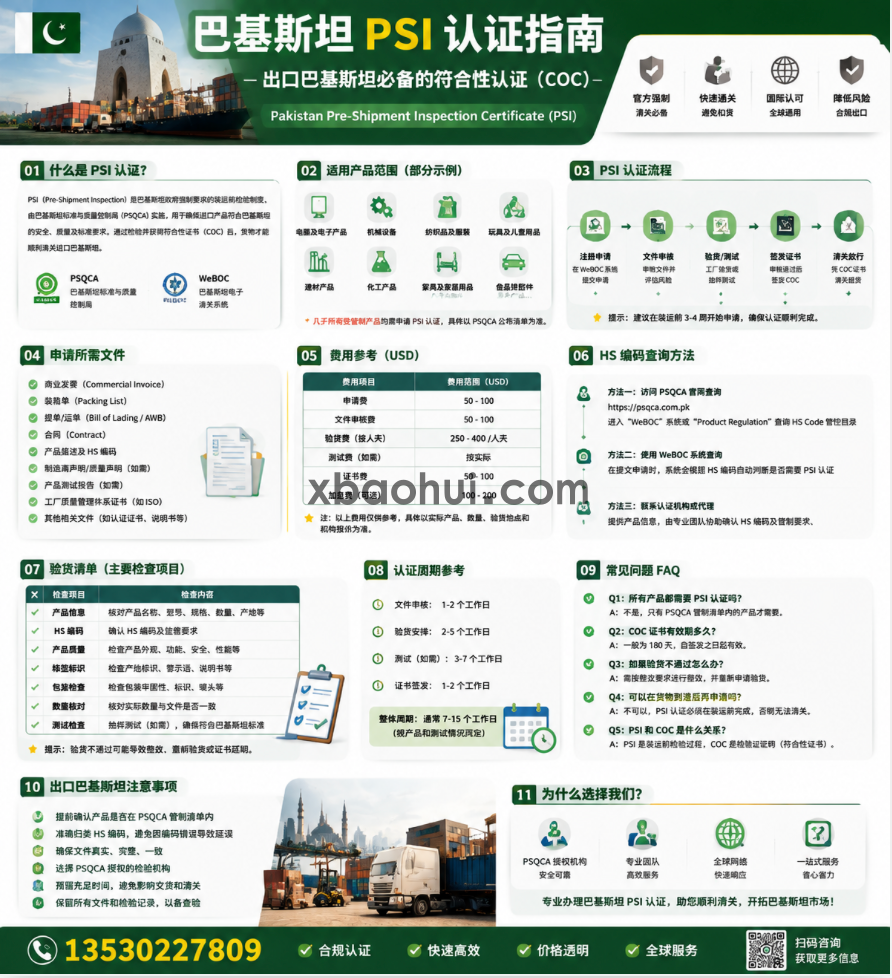
How to apply for PSI certification when exporting to Pakistan? This article explains in detail the applicable products for PSI pre-shipment inspection in Pakistan, photovoltaic product IEC test reports, inspection procedures, application materials, PNAC accreditation agencies, CoC certificates and destination port clearance matters.
1. What is Pakistan PSI certification?
PSI is the abbreviation of Pre-Shipment Inspection, that is, pre-shipment inspection. It means that before the goods are exported, a third-party organization with corresponding qualifications will be used at the production factory, warehouse or designated location.
Conduct on-site verification of product quantity, model, specification, packaging, labeling, appearance and quality consistency, and issue a PSI inspection report.
In Pakistan’s photovoltaic product import compliance, PSI is usually used in conjunction with IEC test reports and CoC product conformity certificates. Pakistan’s Ministry of Commerce SRO 604(I)/2019 proposes PSI and CoC related requirements for photovoltaic products.
The relevant certificate should be issued by a third-party agency approved and accredited by Pakistan National Accreditation Council PNAC.

2. Which products require Pakistani PSI?
Pakistan PSI is not a universal inspection system applicable to all export goods. Enterprises should confirm the specific supervision path according to product categories:
Photovoltaic products: Solar modules, photovoltaic panels and other products are key applicable categories for PSI and CoC.
Pesticide products: Related imported products usually require a PSI pre-shipment inspection certificate at the place of origin as a customs clearance document for import into Pakistan.
Other products: It may involve PSQCA compulsory certification, Pakistan Single Window (PSW) electronic verification, PTA model approval or other department licenses, and the PSI process for photovoltaic products should not be directly applied.
Before exporting, the importer should confirm the Pakistan HS Code, import license, tariff classification, mandatory standards and customs clearance document requirements of the destination port of the product.
3. Pakistan PSI certification process
Confirm whether the product is suitable for PSI: provide product name, purpose, HS Code, model, brand and importer information, and verify regulatory requirements.
Select an accredited inspection agency: For photovoltaic products, it should be confirmed that the inspection and certification agency has the corresponding PSI/CoC qualifications recognized by PNAC.
Submit application materials: Submit PSI application form, proforma invoice, packing list, technical information, product photos and test reports.
Complete product production and make an appointment for inspection: It is recommended to arrange inspection before the goods are produced, packaged and shipped.
Implement on-site inspection: The inspector checks the quantity, model, specification, label, packaging, appearance, key technical parameters and document consistency of the goods.
Issuance of PSI inspection report: After the goods pass the inspection, the agency issues a PSI report.
Apply for CoC certificate (if applicable): Photovoltaic products usually need to be combined with a valid IEC test report and PSI report to apply for a CoC product compliance certificate for customs clearance.
4.PSI inspection content
The actual inspection items of Pakistan PSI will vary depending on the product category and regulations, and usually include:
Consistency of product name, brand, model, specifications and application documents
Shipping quantity, packaging quantity and box mark information
Product appearance, workmanship quality and obvious defects
Product labels, nameplates, origin markings and warning information
Outer packaging, transportation packaging and protective status
Product critical dimensions, performance parameters or on-site functional inspection
Consistency of commercial invoice, packing list, test report and actual goods
The core of pre-shipment inspection is to confirm that the actual shipped goods comply with the order, technical documents and applicable regulatory requirements, rather than just verifying the appearance of the product.
5. Common application materials
PSI application form, packing list, invoice, third-party product test report, etc.
Inspection address, production completion date, contact person and estimated shipping date
The IEC test report of photovoltaic products should cover the actual export model; if the manufacturer, model, and key specifications in the report are inconsistent with the actual goods, it may affect the issuance of PSI or subsequent CoC.
6. Risk warning before shipment
Confirm applicability first before arranging production and shipping: You cannot assume that the product will be suitable just because the customer verbally requires PSI, nor can you ignore customs clearance requirements because you have not heard of PSI.
Inspection should be carried out before shipment: If you apply after the goods are loaded into containers, leave the factory or leave the port, you may not be able to meet the pre-shipment inspection conditions.
The document and the physical object must be consistent: the model, quantity, brand, packaging, origin, and technical parameters should be consistent with the invoice, packing list, and test report.
PSI is not the same as CoC: PSI is a pre-shipment inspection report; CoC is a product certificate of conformity. Photovoltaic products usually need to pay attention to IEC reports, PSI and CoC at the same time.
Confirm electronic verification requirements: Pakistan implements PSW electronic verification for some food and non-food imported goods, and importers should confirm system-side access requirements in advance.
7. Frequently Asked Questions FAQ
Is PSI certification required for all products in Pakistan?
No. Pakistan PSI is implemented for specific regulated products or import situations. Photovoltaic products are a category that clearly needs to be focused on PSI verification; special products such as pesticides may also require origin PSI.
What is the difference between Pakistan PSI and CoC?
PSI is a pre-shipment on-site inspection of the actual shipped goods; CoC is a Certificate of Conformity that certifies that a product complies with applicable standards or regulations. For Pakistani PV products, it is usually necessary to apply for CoC based on PSI report and IEC test report.
What do I need to prepare before applying for PSI for photovoltaic products?
IEC test reports, product specifications, proforma invoices, packing lists, product photos and inspection plans covering export models should be prepared first. After the goods are produced, on-site inspection will be arranged by the accredited agency.
Can PSI report replace Pakistan CoC?
Usually not. For photovoltaic products requiring CoC, the PSI report is one of the important supporting documents for CoC application, but it cannot replace the CoC clearance certificate.
Business Contact
Mr. Zhou Tel: +86 13530227809 13530227809