
Saudi Arabia Export Documentation Requirements: Complete Document List and Compliance Points
To export goods from Saudi Arabia, core documents include: commercial invoice, packing list, bill of lading or air waybill, certificate of origin, certificate of insurance (optional), export declaration form submitted through the FASAH platform,
and export licenses for restricted or sensitive goods. The above is the basic document framework required for exporting to Saudi Arabia. The specific requirements, applicable scenarios, and common errors for each type of document are explained below.
1. List of key export documents
1. Commercial invoice
Commercial invoice is the core document for export customs declaration. It must clearly list the description of the goods, quantity, unit price, total price, trade terms (such as FOB, CIF) and complete information of the buyer and seller.
2. Packing list
The packaging list must be completely consistent with the commercial invoice information, listing the number of pieces, gross weight, net weight, volume and packaging type of each package. The Saudi port authorities require that the cargo description, weight, and volume in the bill of lading and manifest must be
Exact match to commercial invoice.
3. Bill of lading or air waybill
A bill of lading or air waybill is issued by the carrier and is evidence of receipt of goods and contract of carriage. For goods shipped to Saudi Arabia, at least a 6-digit HS code must be entered in the manifest.
Starting from May 2026, Saudi port authorities require import manifests to be mandatory to fill in the first 6 digits of the global HS code.
4. Certificate of Origin
Certificates of Origin are usually issued by the Chamber of Commerce of the exporting country. Saudi Arabia requires that all exported goods must clearly display the words "Made in [Country]" on the country of origin marking.
According to the guidelines of the Japan External Trade Organization (JETRO), the certificate of origin must be an original issued by the Chamber of Commerce. Notarization or embassy authentication may be required depending on the situation.
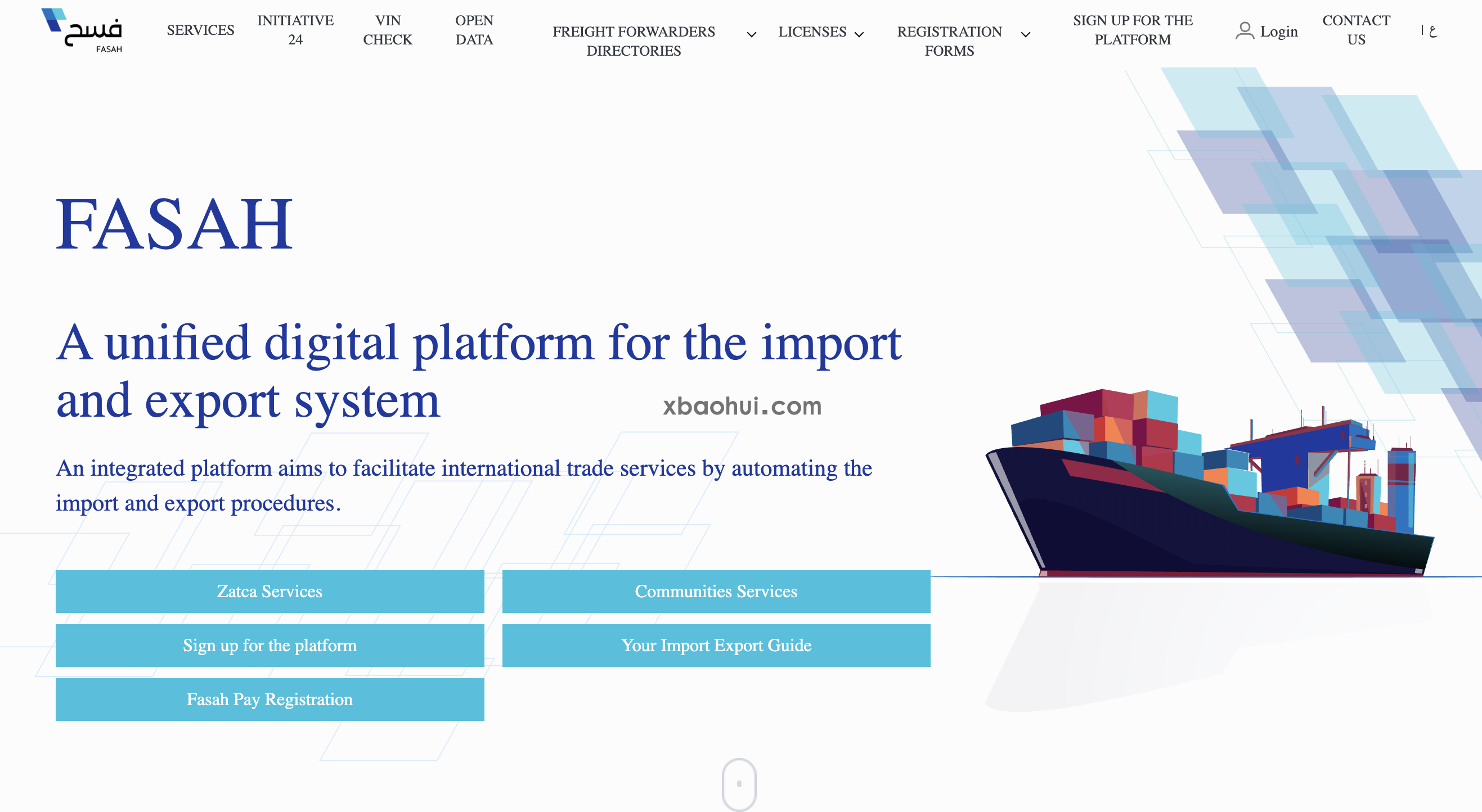
5. FASAH platform export declaration form
FASAH is Saudi Arabia’s one-stop trade facilitation platform through which exporters or their customs brokers submit export declarations. According to the regulations of the Saudi Zakat, Tax and Customs Authority (ZATCA),
Exporters are required to submit invoices to create export declarations and manifests are generated by shipping lines.
6. Export License
Saudi Arabia has implemented export controls or bans on some commodities, including oil derivatives, subsidized commodities, natural resources, etc. Exporters need to check Saudi Arabia’s list of prohibited or restricted export commodities.
Confirm whether the goods in question require an export license.
2. SABER certification: mandatory compliance threshold for export to Saudi Arabia
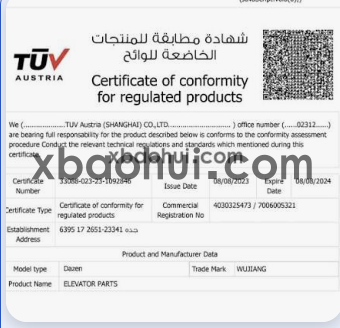
Although SABER certification is more well-known in the Saudi import process, exporters also need to understand its logic, because the compliance of many export documents directly depends on the validity of the SABER certificate.
SABER is an online conformity assessment platform operated by the Saudi Standards, Metrology and Quality Organization (SASO). Starting from 2021, controlled products must complete compliance registration through SABER, otherwise Saudi Customs will not release them.
The entire process is led by the local importer in Saudi Arabia, and the exporter cooperates in providing information.
1. The difference between PC certificate and SC certificate
SABER certification is divided into two steps: first apply for a product conformity certificate (PC certificate), and then apply for a batch conformity certificate (SC certificate) before each shipment.
PC certificate (product conformity certificate): proves that the product model complies with SASO technical regulations and is valid for 1 year.
SC Certificate (Batch Conformity Certificate): Proves that a specific batch of goods is consistent with the approved PC certificate, valid for a single batch.
Exporters need to pay attention: SC certificates implement "one vote, one application" and the application must be completed before the goods arrive at the Saudi port, otherwise it will directly affect the customs clearance timeliness.
Key changes in SABER in 2026: 12-bit HS encoding
Starting from January 1, 2026, the Saudi SABER platform has adjusted the customs tariff codes of some products, involving textiles, building materials, electronic appliances, mechanical equipment, auto parts and other fields.
Continuing to use the old HS code to apply for SABER certificates or produce customs clearance documents may lead to risks such as inability to match platform information, certificate applications being returned, and port inspection delays.
Exporters should review the current 12-digit customs code and SABER certificate status with Saudi importers, customs brokers and certification agencies.
3. Common errors in export documents
Even minor documentation inconsistencies can result in Saudi Customs detention, fines, or shipment rejection. The following errors are the most common:
- Using wrong or outdated HS coding: After the 2026 coding adjustment, some old coding has been deleted or refined
- Information mismatch between files: product name, specifications, quantity, and weight in invoice, packing list, and bill of lading must be exactly the same
- Products not registered on the SABER platform: controlled products lacking PC/SC certificates will not be able to pass FASAH customs clearance verification
- Missing Country of Origin Marking: COO (Country of Origin) mark is not shown on the package
- Submit handwritten or irregularly formatted documents: Saudi Customs has strict requirements on document standardization
4. Supplementary and supporting documents
1. Letter of Credit
is issued by the buyer's bank and guarantees payment upon submission of satisfactory documents by the exporter. Often used in high-value international transactions.
2. Proforma invoice
An estimated invoice issued before shipment stating expected costs and terms of sale. Buyers often use proforma invoices to arrange financing or apply for import licenses.
3. Inspection certificate
Issued by a third-party inspection agency confirming that the goods have passed inspection and meet quality, quantity and packaging requirements. This is usually required for sensitive or high-value shipments.
5. Frequently Asked Questions
Question: Do documents for export to Saudi Arabia have to be submitted through the FASAH platform?
According to ZATCA regulations, exporters are required to submit invoices to create export declarations in the FASAH system, and manifests are generated by shipping companies through this platform. In actual operation, it is usually handled by a licensed customs broker.
Question: Should SABER certification be performed by the exporter or the importer?
SABER system accounts are only open to local importers legally registered in Saudi Arabia, and Chinese exporters cannot register directly. The role of the exporter is to provide test reports, product pictures, label samples and other information to Saudi importers.
The importer completes the application on the SABER platform.
Question: After the 2026 HS coding adjustment, can the issued SABER certificate still be used?
Certificates that have been issued and are within the validity period are not automatically invalid in principle, but the goods may be verified according to the current Saudi Arabian coding system during customs clearance. It is recommended to conduct inspections on orders in hand and goods in transit.
Verify that the certificate matches the current encoding.
Need assistance with Saudi export documentation or SABER compliance? Feel free to contact our team for customized guidance for your product category.
Business Contact
Mr. Zhou Tel: 0755-26996194 13530227809
————END————