
Exporting to Egypt Certificate of Origin Verification Guide: Process, Key Points and Frequently Asked Questions
The Certificate of Origin (COO) exported to Egypt is not only used to prove the country of origin of the goods, but is also directly related to Egyptian import customs clearance, tariff application, trade agreement treatment and document compliance. For Chinese exporters, the focus is not just on “issuing a certificate of origin”, but on ensuring that the certificate of origin, commercial invoice, packing list, bill of lading/airway bill and ACID information are verifiable, traceable and completely consistent.
Egyptian customs usually requires imported goods to be accompanied by a certificate of origin; relevant information shows that the certificate of origin generally needs to be issued by the competent authority of the exporting country and certified by the Egyptian embassy or consulate in the exporting country before it can be accepted. Commercial invoices usually also need to complete corresponding certification simultaneously.
What is Egyptian Certificate of Origin Verification
Egyptian Certificate of Origin Verification refers to the process by which importers, Egyptian customs, banks, Egyptian embassies and consulates abroad or other competent authorities verify the issuing agency, seal, signature, goods origin information, document logic and certification chain of the certificate of origin.
For Chinese export companies, verification usually revolves around the following dimensions:
- Whether the certificate of origin is issued by a qualified organization, such as the China Council for the Promotion of International Trade/China Chamber of International Commerce system or an organization qualified to issue by law.
- Whether the origin of the goods is true and accurate, especially in situations such as "Made in China", "Re-export to a third country", "Processing with imported raw materials", etc.
- Whether the exporter, consignee, goods description, quantity, packaging, shipping marks, invoice number and date on the certificate of origin are consistent with the commercial invoice, packing list, and bill of lading.
- Whether the certification/consular authentication procedures required by the Egyptian importer, bank or customs clearance channel have been completed.
- For goods involving the Egyptian NAFEZA/ACID (Advanced Cargo Information Declaration) system, whether the ACID number and importer information in the document match.
- If the goods enjoy preferential tariffs, whether the correct preferential certificate of origin format is used and the corresponding rules of origin are met.
The role of the certificate of origin is not only to say "the goods come from China". The Egyptian authorities will use it for tariff collection, trade agreement qualification determination and import supervision; incomplete and inconsistent document information or unsatisfactory certification may lead to customs clearance delays, replacement parts, order changes, fines, and even the risk of goods being stranded at the port.
Procedures for verification of export certificate of origin to Egypt
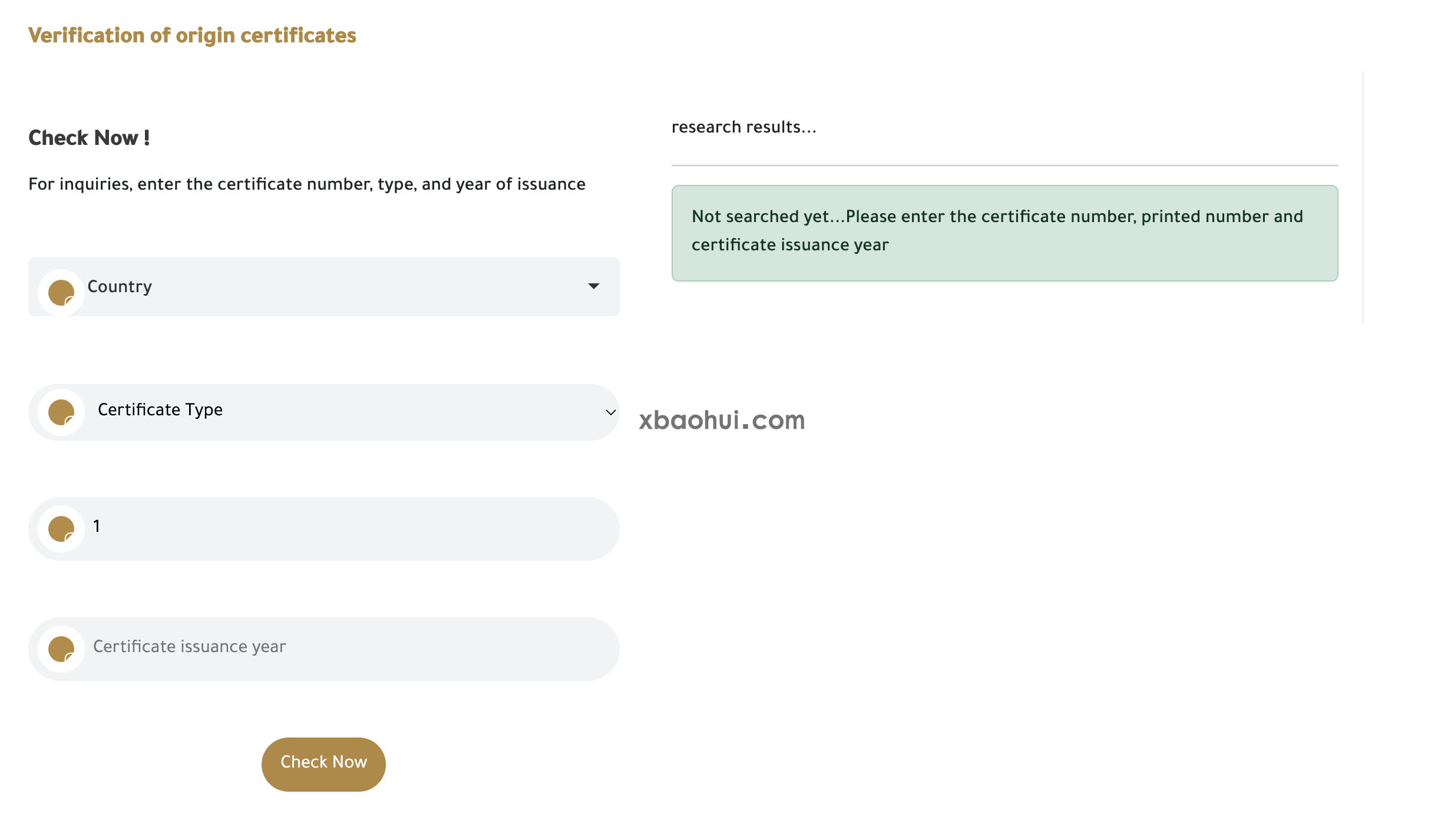
The following process is applicable to the practical preparation for general Chinese exporters when handling export documents for the Egyptian market. There may be differences between different products, trade methods, importer bank requirements and Egyptian embassy and consulate rules. Before shipment, the latest requirements of Egyptian importers, freight forwarders, banks and acceptance agencies should prevail.
1. Confirm whether the goods require a certificate of origin
Have the Egyptian importer confirm the documents required for customs clearance before signing a contract or arranging production. Key points to confirm:
- Whether a Non-preferential Certificate of Origin is required.
- Whether it involves preferential certificates of origin under specific trade agreements.
- Whether the certificate of origin and commercial invoice need to be certified together.
- Are there product stewardship, GOEIC registration, labelling, testing, certificate of compliance or inspection requirements.
- Whether the ACID number needs to be included on the complete set of shipping documents.
- Whether additional formatting requirements are imposed by the letter of credit, the collecting bank, or the importer's internal compliance process.
Egyptian import documents usually include commercial invoices, certificates of origin, and other shipping or packaging documents; the Open Trade Guide states that certificates of origin usually need to be authenticated by the Egyptian consular agency in the exporting country.
2. Prepare consistent basic trade documents
Whether the certificate of origin verification can be successfully passed depends on "single consistency". It is recommended to lock the commercial invoice and packing list first, and then apply for the certificate of origin accordingly.
It is recommended to check the following fields:
| Check items | Certificate of Origin Requirements | Which files should be consistent with |
|---|---|---|
| Exporter name, address | Use the standardized English name in the business license and filing information | Commercial invoice, packing list, bill of lading, customs declaration information |
| Importer/Consignee | Fill in the complete English information provided by the Egyptian importer | Commercial invoice, bill of lading, ACID declaration information |
| Cargo name | Description should be specific and identifiable, avoid just writing general product names | Invoice, packing list, bill of lading, customs declaration |
| Country of origin | A true reflection of the country of manufacture or obtaining origin qualifications | Labels, invoices, customs declaration information |
| Quantity, packaging, gross and net weight | There should be reasonable logical correspondence | Packing list, bill of lading |
| Invoice number, date | Should be clear and accurate | Commercial invoice |
| Mark | If there is no mark, N/M can be marked; if there is a mark, it should be consistent. | Packing list, bill of lading |
| ACID number | If applicable, it should be accurately reflected according to the information provided by the importer. | Invoice, packing list, bill of lading/waybill and related declaration information |
Egypt’s import data has strict requirements on document consistency. The commercial document description of the Egyptian Embassy in the United States specifically emphasizes that product description, value, quantity, signature, seal and information between documents must be accurate and consistent, and comply with Egyptian customs format requirements.
3. Verify the basis for determining origin
Before applying, you should first confirm whether the goods can be declared as "originating in China".
Evidence can usually be preserved from:
- The production process of the product.
- Raw material procurement records and supplier information.
- BOM, cost components and production records.
- Documentation proving domestic processing, assembly, and manufacturing.
- Product labels, packaging, and factory inspection records.
- Export customs declaration information and photos or descriptions consistent with the actual goods.
Particular attention should be paid to: simple repackaging, relabeling, labeling, repackaging or pure trade resale may not necessarily enable the product to obtain the qualification of Chinese origin. If the product actually originates from a third country, it should be declared truthfully. You cannot directly fill in "Origin from China" just because it is exported from China.
4. Apply for issuance of certificate of origin
Submit application to a qualified visa agency based on export model and customer requirements. Common materials include:
- Certificate of Origin application form or electronic application information.
- Commercial Invoice.
- Packing list.
- Export contract or order.
- Export declaration or pre-entered information.
- Production certificate, raw material certificate or other auxiliary materials of origin.
- ACID number and document format requirements provided by the importer.
- Certification application materials when certification is required.
Each item should be checked before applying for a visa, especially the English spelling, company name, address, product model, quantity, value, invoice number, date and country of origin. Once the certificate of origin is issued and then modified, it will often lead to re-issuance, re-certification and shipping delays.
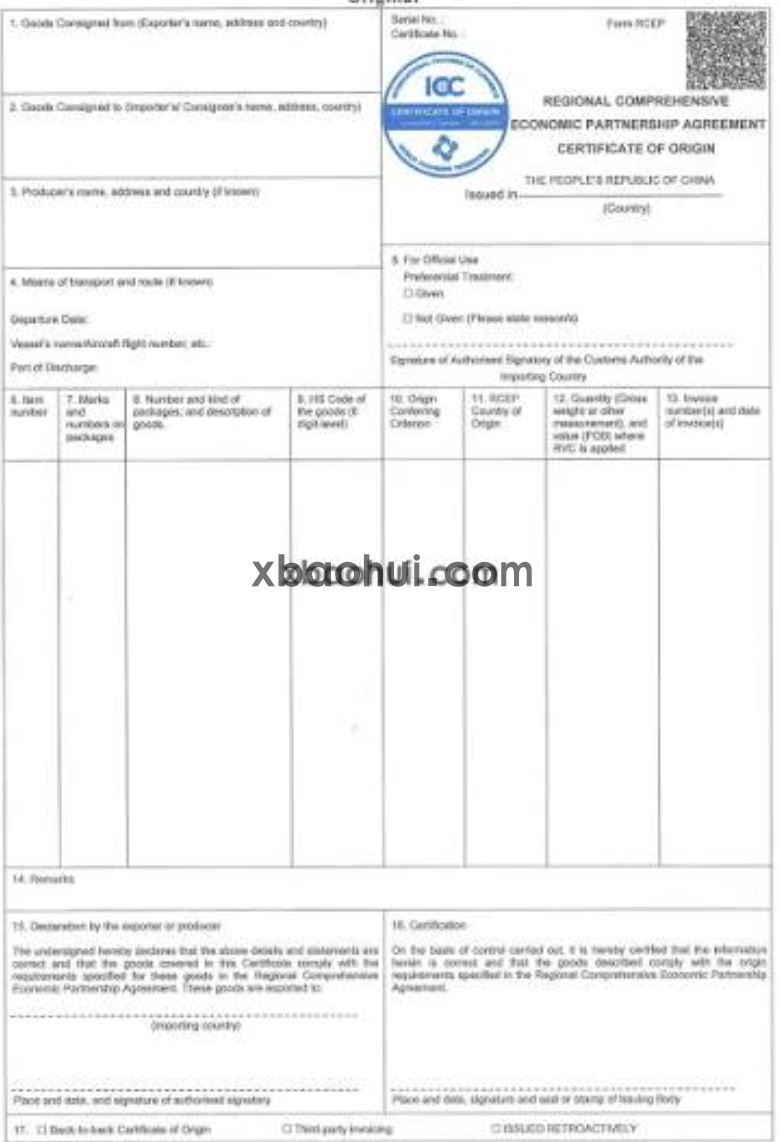
5. Apply for authentication or consular authentication
In Egyptian import business, certificates of origin and commercial invoices often need to complete the certification chain in accordance with local requirements. The specific path depends on the exporting country, the acceptance agency, the nature of the document and the current embassy and consulate requirements, but usually includes:
- A certificate of origin is issued or certified by a competent authority.
- Complete relevant authority certifications as required.
- Apply for consular authentication/commercial document authentication from the Egyptian embassy or consulate in the exporting country or designated channels.
- Deliver certified documents to the importer, bank, forwarder or for electronic submission.
Public trade information clearly mentions that Egyptian customs usually requires that the certificate of origin be certified by the Egyptian consular agency in the exporting country; commercial invoices also often need to be certified simultaneously.
6. Cross-check with ACID and shipping data
Under the Egyptian ACID mechanism, importers usually need to obtain the ACID number of the goods through the NAFEZA platform. The exporter should obtain and verify this number before issuing the bill, and accurately reflect it in the relevant documents according to the requirements of the importer, shipping company, freight forwarder and bank.
It is recommended to make an "Egyptian Shipping Document Verification Form" before sailing, and the business, documents, freight forwarders and customers should jointly confirm:
- ACID number is correct.
- Importer name consistent with ACID information.
- Are the product names in the invoice, packing list, certificate of origin, and bill of lading consistent?
- Whether the invoice amount, currency, and trade terms are consistent.
- Whether the HS code is consistent with the importer’s declaration caliber.
- Whether the country of origin is consistent with the product label, certificate and customs declaration information.
- Whether the consignee, notifier, number of pieces, and gross weight on the bill of lading are consistent with other documents.
Some industry practice materials list ACID numbers as important information in Egyptian commercial import documents, and recommend that they be reflected in commercial invoices, packing lists and shipping documents. Specific fields and time limits should be subject to the latest guidance from importers and carriers.
7. Save traceable files
It is recommended to maintain at least the following files in case of subsequent verification initiated by the customer, bank, visa agency or Egypt:
- Original and duplicate issued certificate of origin.
- Certified commercial invoice and certification page.
- Export contracts, orders and payment information.
- Customs declaration, bill of lading/airway bill, packing list.
- Production records, raw material certificates, BOM.
- ACID information and confirmation email with importer.
- Product labels, packaging photos, cabinet photos.
- Communication records with certification agencies, Egyptian embassy and consulates, and freight forwarders.
Origin verification is traceable. The certificate of origin issued by Egypt's GOEIC requires exporters to retain records and documents that can prove the declaration of origin. The public information mentions that the retention period is five years from the date of issuance. Although this rule is aimed at the management of certificates of origin for Egyptian exports, it also reflects the compliance principle that certificates of origin should be retained for a long time and can be verified.
Things to note when exporting to Egypt Certificate of Origin Verification
Certificate of Origin is not a “formal document”
The most common misunderstanding is that the certificate of origin is a document that only needs to be stamped. In fact, during the Egyptian review, commercial invoices, bills of lading, labels, packaging, customs declaration information and import declaration data will be combined for cross-verification.
If the certificate of origin reads "China", but the product label, invoice description, production data or actual condition of the goods are shown to be from other sources, it may constitute a risk of false declaration of origin.
Product descriptions must be specific and relevant
Do not just fill in general descriptions such as "Machine", "Accessories", "Goods", "Parts", etc. It is recommended to use the method of "product name + model/specification + material or use", for example:
Stainless Steel Kitchen Sink, Model KS-8245, 304 Stainless Steel
This makes it easier for customs, banks and importers to check certificates of origin with invoice, packaging and customs declaration information.
Do not make unauthorized changes to authenticated files
After the certification of the certificate of origin or commercial invoice is completed, if the amount, quantity, product name, invoice number, importer information or country of origin are modified, it usually needs to be re-issued and re-certified. Do not make any handwriting alterations, affix the seal of a non-visa agency without permission, or only modify the scanned copy before continuing to use it.
"Exported from China" does not equal "originated in China"
When Chinese trading companies export goods produced in third countries, they should truthfully indicate the actual country of origin. If the product is processed in multiple countries, the place of final substantive processing needs to be determined based on the applicable rules of origin, rather than the place of shipment or the location of the trader instead of the place of origin.
Certification requirements need to be confirmed ticket by ticket
Egypt's document authentication requirements may vary depending on product category, import method, importer qualifications, bank requirements, Egyptian embassy and consulate regulations and regulatory policies. Don’t base new orders solely on historical orders or what other customers have done.
The safest course of action is to have the Egyptian importer confirm in writing prior to PI confirmation:
- Certificate of Origin type.
- Whether consular authentication is required.
- Whether commercial invoices require simultaneous authentication.
- ACID numbers and display format.
- Whether to require original documents to be shipped on board, electronically scanned copies to be pre-examined or bank documents to be presented.
- Is there a fixed template, literal representation, or additional declarations.
Certificate of Origin is not equal to Product Conformity Certificate
A certificate of origin proves the source of the goods and does not mean that the product automatically meets Egyptian quality, safety, labeling, registration or inspection requirements. Some products may also involve GOEIC importer/factory registration, test reports, product labeling, inspection or compliance documents.
Export enterprises should manage "origin compliance" and "product access compliance" separately. A certificate of origin alone does not replace product registration, inspection or compliance requirements.
FAQ
1. Is it necessary to apply for a certificate of origin when exporting to Egypt?
Most commercially imported goods usually require a certificate of origin as one of the customs clearance documents. However, whether it is required, whether it must be certified, and whether a special format is applicable should be jointly decided by the Egyptian importer, customs clearance agent, bank and product supervision requirements. Public trade guidelines show that Egyptian customs import documents usually include a certificate of origin and require certification by the Egyptian consular agency in the exporting country.
2. Do the certificate of origin and commercial invoice need to be certified together?
In many Egyptian orders, the two need to be certified simultaneously. The certificate of origin is used to prove the place of manufacture of the goods, and the commercial invoice is used to prove transaction information, price, quantity and product description; the information in the two documents must be consistent. The Egyptian Commercial Document Instructions also lists commercial invoices and certificates of origin as important documents that need to be accurate, consistent and certified.
3. Can the country of origin on the certificate of origin be filled in with “China”?
"China" can be filled in only when the goods meet the conditions for determination of Chinese origin. If the goods are actually manufactured in a third country, or are simply repackaged, rebranded, or transshipped in China, they cannot be declared as Chinese origin just because they are exported from China.
4. Does the name of the goods on the certificate of origin have to be exactly the same as on the invoice?
It is recommended to maintain complete consistency, at least ensuring that there are no contradictions in product name, model, specification, quantity, packaging, value logic and country of origin. In order to reduce the risk of review by banks, customs and importers, the safest way is to fill in the certificate of origin directly based on the English product name of the commercial invoice.
5. Should the ACID number be written on the certificate of origin?
Whether it needs to be displayed on the certificate of origin should be subject to the latest requirements of the importer, customs clearance agent, shipping company and visa agency. In practice, ACID is an important identification information for goods imported into Egypt, and it is generally necessary to ensure that its use is accurate and consistent in commercial invoices, packing lists, shipping documents and related submissions.
6. What should I do if an error is discovered after the certificate of origin is issued?
Submission of incorrect documents to the customer, bank or forwarder should be immediately suspended and the visa agency should be contacted to confirm the correction, cancellation and re-issuance or re-certification process. Do not make handwritten modifications yourself, nor only modify electronic scans, as this may lead to the authenticity of the document being questioned.
7. How to fill in the country of origin for re-exported goods?
The country of origin should be filled in the country where the goods actually obtain the qualification of origin, not the country of re-export, the location of the shipping port or the location of the trading company. If transshipped through a third country, the transshipment arrangements should be truthfully reflected in the transportation and commercial documents, and ensure that they are logically consistent with the bill of lading, invoice and certificate of origin.
8. The Egyptian customer said “COO is required”, does it mean that he only needs an ordinary certificate of origin?
Not necessarily. You should also continue to confirm whether consular authentication is required, whether there is a fixed format, whether ACID needs to be displayed, whether it needs to be certified together with the commercial invoice, whether preferential rules of origin are involved, and whether documents must be presented through a bank. Merely confirming "COO required" is not enough to guide the complete operation.
9. Can a Certificate of Origin replace GOEIC, testing or compliance documents?
No. Certificate of origin is used to prove the origin of goods; GOEIC registration, inspection, labeling, testing and product compliance information belong to different dimensions of import access requirements. For regulated products, all access documents should be verified simultaneously before placing an order.
10. How to reduce the probability of the Egyptian Certificate of Origin being questioned or canceled?
The most effective way is to establish a "document consistency review mechanism": the business confirms customer requirements, the document checks each document field, the factory confirms the true origin and model, the freight forwarder confirms ACID and transportation information, and finally submits visa and certification. Do not leave the certificate of origin review at the last moment after sailing or before delivering the documents.
Practical suggestions for Chinese exporters
Before exporting to Egypt, it is recommended that certificate of origin verification be included in the order review process, rather than just reissued after shipment. An executable internal process is:
- When receiving an order, confirm whether the product is subject to special supervision in Egypt and whether the customer requires certified certificate of origin and certified invoice.
- Obtain and review Egyptian importer information, consignee information and ACID number during PI phase.
- Lock commercial invoice, packing list, product name, model, quantity and country of origin before shipment.
- Apply for a certificate of origin based on real manufacturing conditions.
- Complete certification as required and retain certification chain, issuance records and basic supporting documents.
- Cross-check invoices, packing lists, certificates of origin, bills of lading, labels and ACID information before sailing.
- Deliver originals, scanned copies and traceable files in a timely manner as per customer, bank and customs clearance requirements.
For companies exporting to Egypt, the key to verification of certificate of origin is not "whether there is a certificate", but whether it can prove that the document is authentic, the place of origin is authentic, the certification is valid, and the information is consistent. It is usually more time- and cost-effective to move this step up to the contract and document preparation stage than to deal with it after inspection, order cancellation or certificate replacement at the Egyptian port.
Business Contact
Mr. Zhou Tel: 0755-26996194 13530227809
——END——